
We all know that storms simply come with the territory in northeast Florida. And we get it all. Summer thunderstorms, tropical systems, and the occasional hurricane are nothing we aren’t used to. And for that reason, the homes in St. Augustine take a beating from wind and rain year after year.
But even a storm that passes quickly can create some serious damage to your roof. Sometimes it’s easy to spot. For example, you might see shingles scattered across your yard. But other times, the damage is a bit harder to find. You might not realize for weeks or months that the integrity of your roof has been compromised.
That said, the sooner you find storm damage and get it taken care of, the better your chances are of avoiding bigger and more costly repairs down the road.
There are some things homeowners should do right after a storm. However, we recognize that the vast majority of homeowners do not have the proper tools and safety equipment to do a thorough assessment of their roof. For that very reason, by no means are we suggesting that you climb up on your roof to take a look around. Please don’t do that.
Rather, follow the tips we’ve outlined below. And if you see a problem, reach out to a professional roofer to take a closer look.
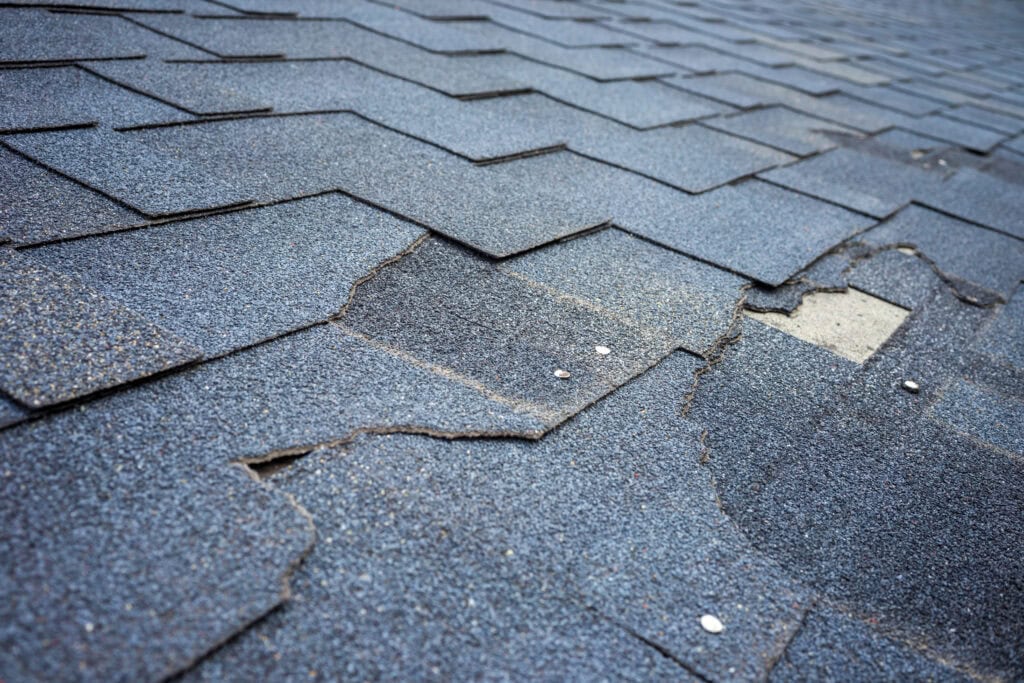
We know it might seem counterintuitive, but the safest place to check for roof damage is from the ground. Walk slowly around your home and look up at the roofline from several angles. A pair of binoculars makes it much easier to spot trouble without a ladder. Inside, check ceilings and closets for water stains, and take a flashlight into the attic to look for damp insulation or daylight coming through the decking.
As you inspect, keep an eye out for missing or lifted shingles, fallen tree limbs, bent or missing flashing around chimneys and vents, and debris resting on the roof. Water spots on interior ceilings are another warning sign. Take pictures of everything you see, even if you don’t think what you are spotting is that big a deal. You may find those photos will come in super handy later, especially if you need to file an insurance claim.
If you take one thing away from this article, it’s that a leak is a leak. Your roof shouldn’t leak. So, no matter how big the leak is, it’s a problem. Why? Because once water finds a path through the roofing material, it tends to spread along rafters and decking, soaking areas far from the original entry point.
Over time, wet decking softens and loses its strength, which can turn a simple shingle repair into a structural project. Trapped moisture also creates the perfect environment for mold, a problem that affects both your home and the people living in it.
Flashing damage is easy to overlook, yet bent or loose flashing can let water slip behind walls where it goes unnoticed for months. Wind is another sneaky culprit. Gusts that tear off a few shingles often loosen the ones around them, leaving the whole area more likely to fail during the next storm. Timely roof repair in St. Augustine, FL, usually costs far less than waiting until the damage spreads through the structure.
Some situations call for a trained eye. And like we said earlier, very few homeowners have the tools and safety equipment to properly inspect a roof. And even if you have the equipment, do you know what to look for?
The best path forward is to schedule a professional inspection if you notice missing shingles, leaks inside the house, or areas of the roof that appear to sag. If a large branch struck the roof during the storm, or if your neighborhood saw hail or strong winds, an inspection is a smart move even when nothing looks wrong from the ground. Older roofs deserve extra attention as well, since aging materials are more vulnerable to storm damage.
A professional roofer knows where damage tends to hide. Cracked shingles, small punctures, and lifted flashing can be nearly invisible from the yard, yet each one can let water in. Catching those problems early gives you the chance to act before they grow into something bigger.
If you’ve never hired a roofer before, the process is usually pretty easy. While every job is different, most roof repairs follow the same basic steps:
The exact process depends on the type and extent of the damage, but knowing what to expect can make scheduling roof repairs feel much less overwhelming.
Storm damage isn’t going to magically get better. It just doesn’t work that way. So, please know that a loose shingle today can become a leak next month. And that leak? You guessed it. Before you know it, that leak can turn into a hefty repair bill that reaches far beyond the roof itself.
Acting fast may help you avoid water damage, mold, and higher costs in the future. If you believe your home was hit, the team at Neal Strickland Roofing is ready to help with an honest inspection and dependable roof repair in St. Augustine, FL.
If you are experiencing any of the issues we mentioned above, why not contact us for a free estimate? We’re always happy to come out, inspect your roof, and let you know what we think it needs. And, rest assured, we won’t just suggest a roof replacement for the sake of suggesting a roof replacement. If we think your roof has a few more years left and that some repairs will suffice, we’ll let you know. Our goal is to offer complete transparency on what your home needs to keep you covered.
Contact us today for a free estimate.
Neal Strickland Roofing — 153 US-17, East Palatka, FL 32131 | Licensed & Insured | Serving St. Augustine and all of Northeast Florida