
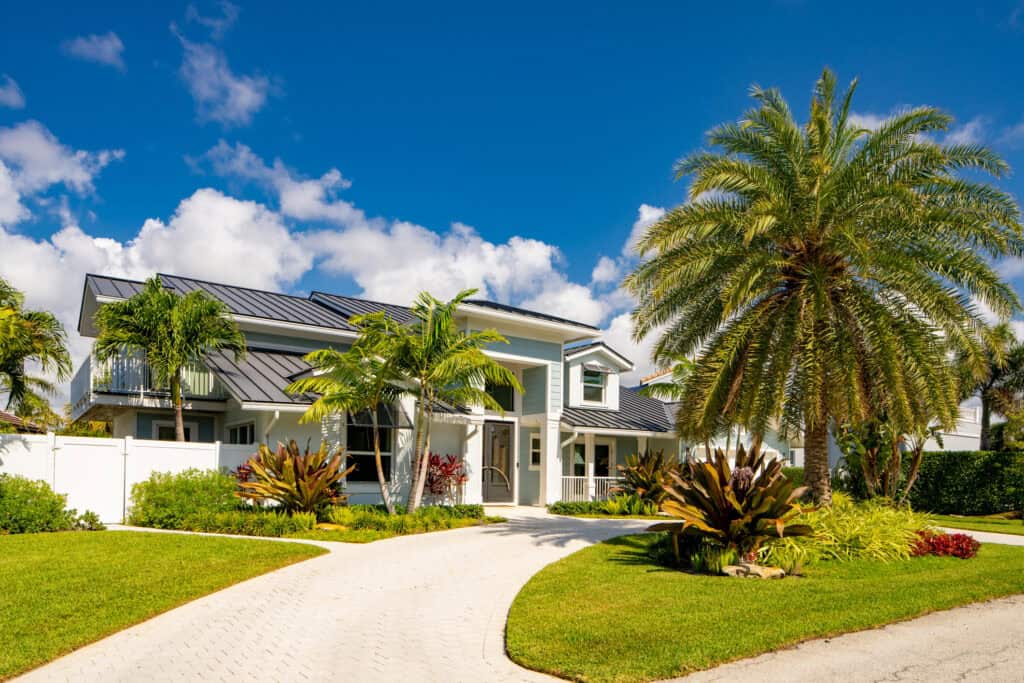
There’s a reason that homeowners plant trees in their yards (or move into a home surrounded by tree growth). It’s because those trees not only add to the curb appeal, but also provide much-needed shade, especially during Florida’s hottest months.
But we won’t deny that Florida can get some nasty weather. And when those winds come whipping through, our trees can experience some serious damage. You get the picture, and you’re probably already envisioning what can happen. A tree topples over during a hurricane and lands on the house. That means more than just tree damage.
What often gets missed is that a tree does not need to fall to cause a problem. Overhanging branches, dropped leaves, trapped moisture, and even animals using tree limbs as a bridge can all wear down a roof over time. This guide walks through the less obvious ways trees interact with roofing systems, so you know what to look for before small issues turn into repairs.
Branches should never touch or rest directly on a roof, but the right distance depends on the situation. As a general rule, aim for at least a 6-foot gap between branches and the roofline during typical weather. Widen that buffer to 10 feet if a tree grows quickly or if a storm is in the forecast, since wind can push branches several feet closer than they sit on a calm day.
This matters at planting time too. If you’re adding new trees to the landscape, consider how large they’ll get. Small ornamental trees do well planted 10 to 15 feet from the foundation, medium trees need 15 to 25 feet, and large shade trees should be planted 30 to 50 feet away. Planting with the tree’s mature size in mind now saves you from dealing with branches creeping toward the roof years down the line.
Trees affect a roof in more ways than most homeowners realize, and the damage often builds up gradually rather than showing up all at once. Here’s a closer look at the most common culprits.
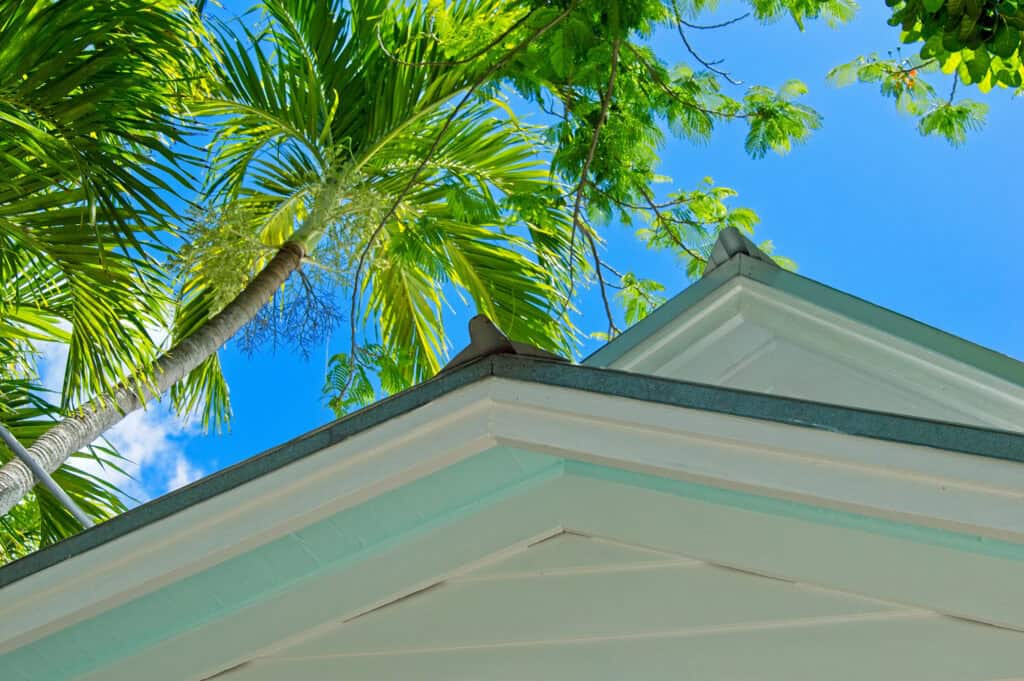
You don’t even need a storm to come through for branches to damage your roof. When trees are left untended and grow, those branches can rub against shingles or tiles over and over. On asphalt roofs, this friction can wear away the granules that protect against sun and moisture. On tile roofs, repeated contact can crack or shift individual pieces. This kind of wear happens slowly and is often hard to spot from the ground.
Small branches can crack tiles, dent gutters, or knock off shingles. Larger limbs carry enough weight to puncture roofing material or damage the deck underneath. Given how often Florida sees strong wind and heavy rain, it’s worth having a roof looked at after any sizable limb comes down, even if nothing appears wrong from inside the house.
Leaves, pine needles, and small twigs tend to collect in roof valleys, around chimneys, near vents, and inside gutters. If you don’t do something about it, that debris will hold water against your roof materials, so the water can’t drain and dry. Clogged gutters compound the problem by keeping water sitting where it shouldn’t be. In Florida’s frequent rain and humidity, this creates conditions where moisture lingers longer than it should.
Overhanging limbs act like a walkway for squirrels, raccoons, and other small animals looking for shelter. Once they’re on the roof, they can chew or dig at shingles, flashing, vents, and soffits while trying to find a way inside. Homeowners sometimes notice scratching sounds in the attic before they ever see damage from outside.
Shade helps cut down on direct sun exposure, but a roof that rarely sees sunlight also takes longer to dry after rain. Combined with Florida’s warm, humid climate, that extra dampness creates a welcoming environment for algae and moss. Staining or growth doesn’t automatically mean a roof needs replacing, but it’s a sign worth checking out.
A little routine attention to the trees around your home goes a long way toward avoiding roof issues later. Consider the following:
Tree maintenance and roof maintenance go hand in hand. A well-managed yard makes it much easier to keep the roof in good shape.
Trees don’t have to fall on a house to cause trouble. Overhanging branches, trapped moisture, debris buildup, and animal activity can all chip away at a roof over months or years. Paying attention to what’s growing near your home and addressing small issues as they come up is often far simpler than dealing with a bigger repair later.
If a branch has struck your roof, or you’re not sure whether nearby trees have caused damage, Neal Strickland Roofing can take a look at the affected areas and talk through whether repairs are needed.