

Walk outside on a Florida afternoon, and you can feel it. The driveway, the car hood, and even the porch rail seem to be giving heat back at you. Your roof is no exception, and it takes the worst of the sun all day long. Average temperatures in Florida can range between 65°F and 80°F depending on the season and where you live.
Plus, Florida is one of the three hottest states in the U.S. by average annual temperature. Add hours of direct sun with almost nothing blocking it, and the roof surface can end up far hotter than the air around it. Here are five things Florida homeowners should know about why this happens.
Just because it is only 90°F outside doesn’t mean your roof’s temperature is only 90°F. Traditional roofing materials can reach 150°F to 185°F during peak summer conditions, according to Florida’s My Florida Home Energy program. That gap exists because roofing materials absorb solar energy throughout the day rather than simply reflecting it away. As the surface heats up, some of that warmth works its way down toward the attic and the living space below. In a state with long stretches of sunshine and heat, that absorption adds up fast.
Roofing material matters here, and two properties in particular decide how much heat a roof holds onto.
A roof that performs well on both fronts tends to run cooler overall. ENERGY STAR points to these two properties as the ones associated with cool roofing performance. Color plays a part too, but it is not the whole story. A dark roof is not automatically a poor performer, since coatings and pigment technology have changed how some roofing products handle solar energy.
Heat absorbed at the roofline does not always stay there. It can work its way into the attic and raise temperatures there, increasing demand on your air conditioning system. Insulation and attic ventilation also play a large part in how much of that heat reaches your living space, so the roof is only one piece of the puzzle. Still, in a climate like Florida’s, cool roofing tends to offer bigger energy savings than it would in a milder region, according to ENERGY STAR.

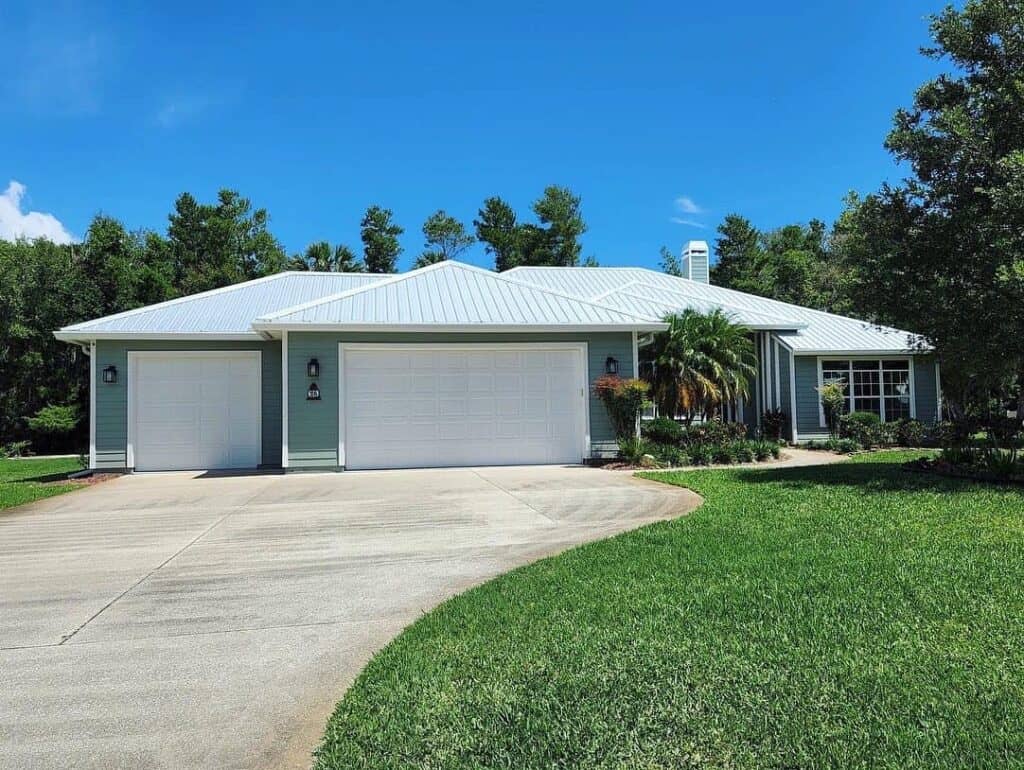
If heat is a concern, it’s definitely worth taking a look at metal roofing. Many metal roofing products offer strong solar-reflective performance, particularly when paired with a quality finish or reflective coating. Painted and coated metal panels can send a meaningful share of the sun’s energy back out while also releasing absorbed heat rather than holding onto it.
But not every metal roof behaves the same way. Bare, unpainted metal can have high reflectance but comparatively low thermal emittance, so the finish matters. Beyond heat performance, metal roofing also stands up well against Florida’s moisture, wind, and near-constant sun exposure.
Homeowners weighing a metal roof should ask about the specific product’s solar reflectance and thermal emittance ratings rather than assuming any metal roof automatically qualifies as a cool roof.
Several other factors shape how hot a home feels underneath its roof.
Homeowners who want to reduce excess heat get the best results by looking at the roofing system as a whole instead of focusing on one part.
Florida roofs will face a lot of sun no matter what, but roofing materials handle that sun very differently. Solar reflectance, thermal emittance, insulation, ventilation, and the roofing material itself all affect how much heat ends up inside your home. Metal roofing is an option worth considering for Florida’s climate, particularly with the right finish.